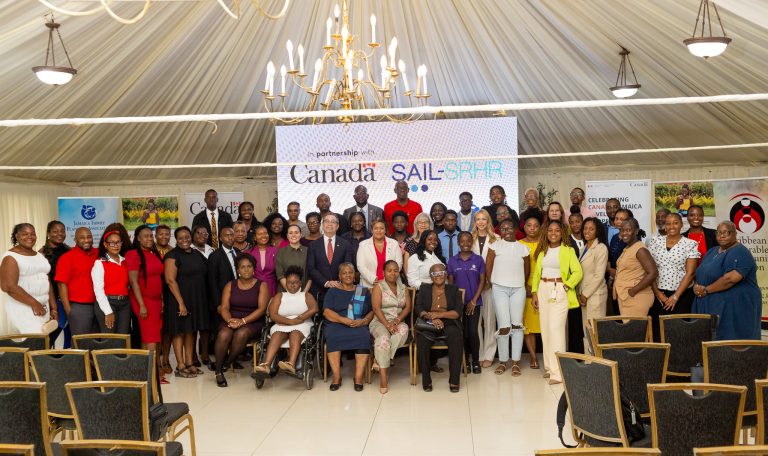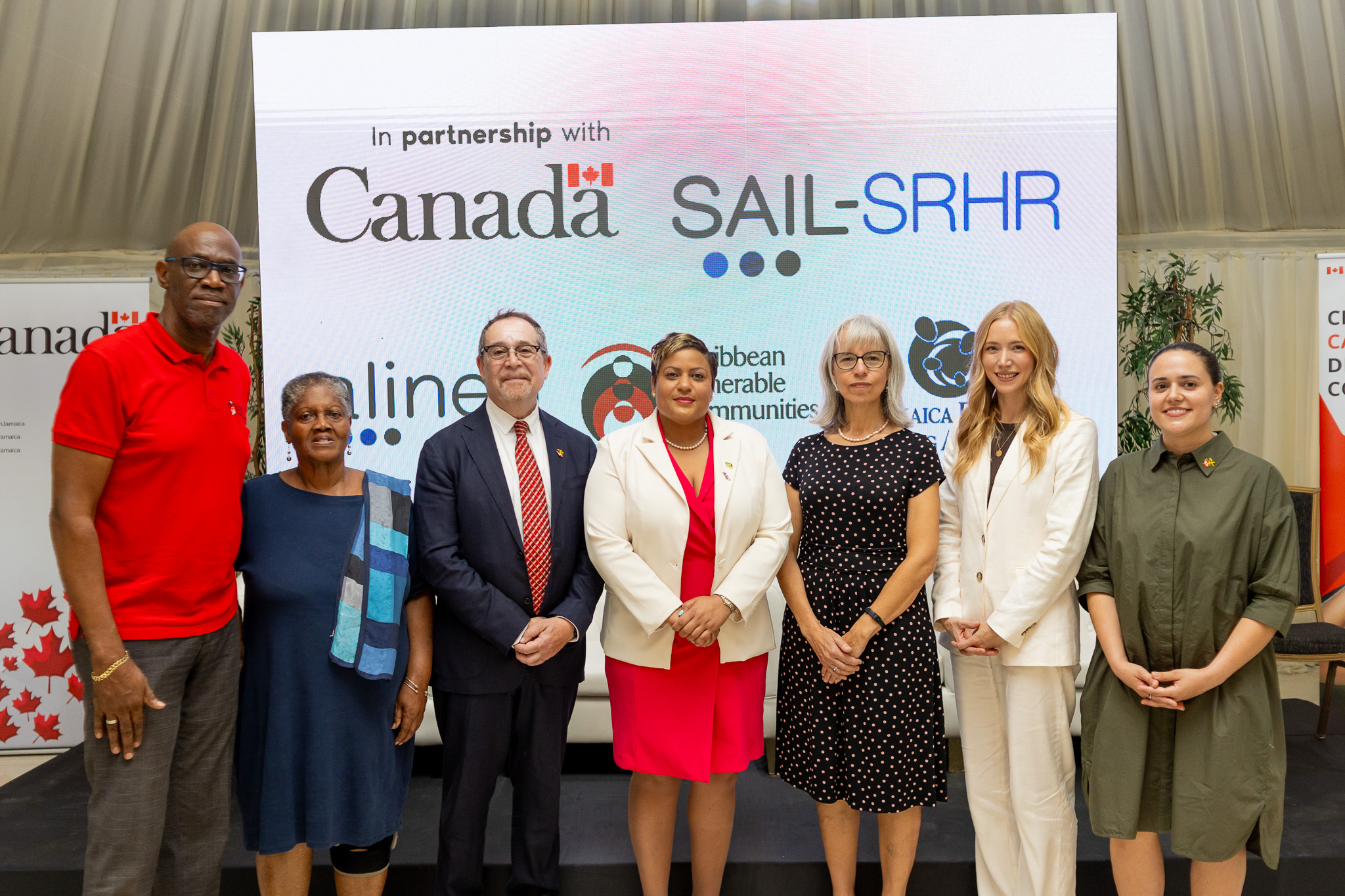
After years of breaking barriers, amplifying young voices and expanding access to sexual and reproductive health information and services, the Strengthening Access, Inclusion and Leadership for Sexual and Reproductive Health and Rights (SAIL-SRHR) project recently celebrated its achievements and impact at a close-out ceremony in Kingston. The ceremony, held at the Terra Nova All-Suite Hotel on October 7, brought together government representatives, development partners, civil society organisations, healthcare professionals and young people to reflect on the project’s impact and the importance of sustaining its gains.
Funded by Global Affairs Canada through a CAD $5 million investment, the initiative was implemented by Alinea International in partnership with Caribbean Vulnerable Communities (CVC) and the Jamaica Family Planning Association (JFPA.
Since its launch in 2022, SAIL-SRHR has helped strengthen access to sexual and reproductive health information, services and opportunities for adolescents, particularly those from vulnerable and underserved communities.
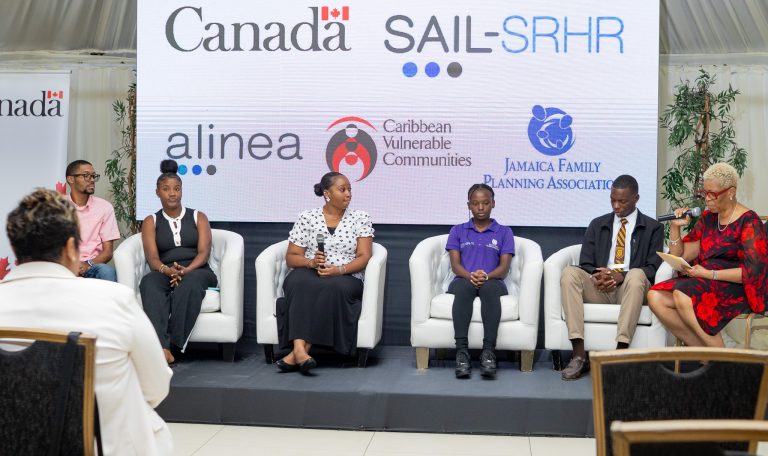
Participants in the SAIL-SRHR joined CVC’s Andrea Campbell-Wright for a panel discussion
Thousands Reached, Lives Changed
The project has reached more than 13,000 adolescents, trained over 430 healthcare providers and more than 200 teachers, while mobilising hundreds of peer educators to support their communities. But beyond the numbers are stories of young people finding their voices, challenging harmful social norms and creating new opportunities for themselves and others. Through the project’s Participatory Action Research initiative, young people from Clarendon, Manchester, St. Catherine and St. Thomas were trained to investigate issues affecting their peers, including gender-based violence, adolescent mental health and sexual and reproductive health.
Rather than simply being the subjects of research, these young people became researchers and advocates, using their findings to inform discussions about policies, services and community responses. The initiative also supported youth entrepreneurship through life skills training, mentorship and grants that helped young people establish or expand businesses in areas such as agriculture, food services and beauty.
Speaking at the ceremony, Canada’s High Commissioner to Jamaica, His Excellency Mark Berman, acknowledged the project’s achievements and the partnerships that made them possible. “Canada is proud to have supported SAIL, and we hope that the relationships, knowledge, and leadership built through this partnership will continue to improve outcomes for adolescents and vulnerable populations long after the project’s conclusion,” he said. He also highlighted the contributions of young peer educators, researchers and entrepreneurs whose leadership helped drive the project’s success.
Strengthening Jamaica’s Health System
Beyond its direct engagement with young people, the SAIL-SRHR project has contributed to strengthening Jamaica’s health and education systems. The project supported training for healthcare workers, improvements in adolescent-friendly services, sexuality education and the promotion of inclusive, gender-responsive and rights-based approaches to healthcare.
Delivering the keynote address, Minister of State in the Ministry of Health and Wellness, the Hon. Krystal Lee, commended the partnership for strengthening the country’s ability to respond to adolescents’ needs. “The SAIL-SRHR project has made a meaningful contribution to this effort. Through its focus on strengthening health systems, building capacity within the health and education sectors, and promoting inclusive, gender-responsive, and rights-based approaches, the initiative has helped to improve the delivery of adolescent-friendly services across Jamaica’s Southern and South East Health Regions,” she noted.
The Minister of State also highlighted the continuing challenges facing adolescents, including declining condom use and risks associated with sexually transmitted infections and HIV. She noted that the Ministry intends to build on the project’s achievements as work continues towards completing a national Sexual and Reproductive Health Policy aimed at reducing barriers to healthcare, particularly for adolescents and vulnerable populations.
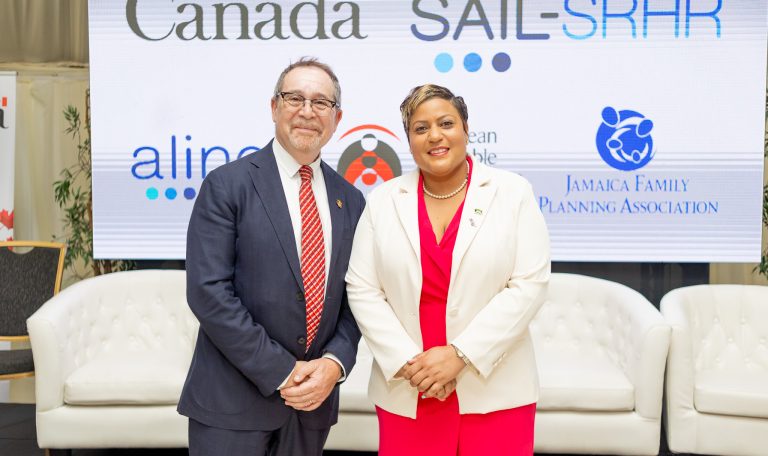
State Minister in the Helath and Wellness Ministry Hon. Krystal Lee (right) with
Canada’s High Commissioner to Jamaica, His Excellency Mark Berman
Young People at the Centre of Change
For CVC, one of the defining features of the SAIL-SRHR project has been its emphasis on meaningful youth participation and creating opportunities for young people to become advocates for their own health and rights. CVC Executive Director Ivan Cruickshank believes the project has demonstrated what is possible when young people are treated as partners in development rather than simply recipients of services. “What makes the SAIL-SRHR project particularly significant is that we did not simply set out to provide young people with information about their sexual and reproductive health and rights. We created opportunities for them to become leaders, researchers, advocates and entrepreneurs. We’ve seen young people who were once hesitant to speak about issues affecting their lives now confidently engaging decision-makers, challenging harmful norms and helping their peers make informed choices. That is the kind of transformation that goes beyond the life of a project,” he noted.
The CVC Executive Director also emphasized the importance of sustaining the progress made in reducing stigma and discrimination and strengthening access to inclusive, rights-based healthcare. “The conclusion of the SAIL-SRHR project should not mean the end of this work. The barriers facing vulnerable adolescents have not disappeared. What we now have is a stronger foundation, more empowered young people and partnerships that can help us continue pushing for a Jamaica where every adolescent, regardless of their circumstances, can access the information, services and opportunities they need to thrive,” he argued.
The Chief Executive Officer at the JFPA Dr. Pauline Russell-Brown pointed to the impact the project has had on persons working in the healthcare sector. “As far as the healthcare providers are concerned, we’ve seen that the attitudes of many of them, especially those who are actually working with adolescents, have changed. They have a different appreciation of some of the issues that young people are facing, and therefore, an understanding that the provider needs to change how they interact with young people,” she said.
The SAIL-SRHR Project has also made significant strides in strengthening the delivery of comprehensive sexuality education in Jamaica’s schools through its support to the Ministry of Education in training teachers to deliver the Sex and Sexuality component of the Health and Family Life Education (HFLE) curriculum. By supporting training and development of teaching materials and learning aids, the initiative focused on building teachers’ knowledge, skills and confidence to address sensitive topics and create more supportive learning environments for adolescents. According to Nichole Morris, Alinea International’s Field Manager in Jamaica, it’s important to invest in educators as a pathway to improving adolescent health outcomes. “Teachers play a critical role in shaping how young people understand relationships, health and decision-making. By equipping HFLE teachers with the knowledge, skills and confidence to deliver comprehensive sexuality education, SAIL-SRHR has helped create more supportive and inclusive learning environments for adolescents across Jamaica,” she noted.
Beyond the measurable improvements in teacher attitudes, the initiative has also contributed to strengthening the education system’s capacity to deliver comprehensive sexuality education over the long term. “Beyond building individual teacher capacity, SAIL-SRHR has helped strengthen the systems and structures needed to support the sustainable delivery of comprehensive sexuality education. By working closely with the Ministry of Education and supporting implementation of the revised HFLE curriculum, the project contributed to a stronger foundation for equipping young people with the knowledge and skills to make informed decisions about their health and well-being,” she said.
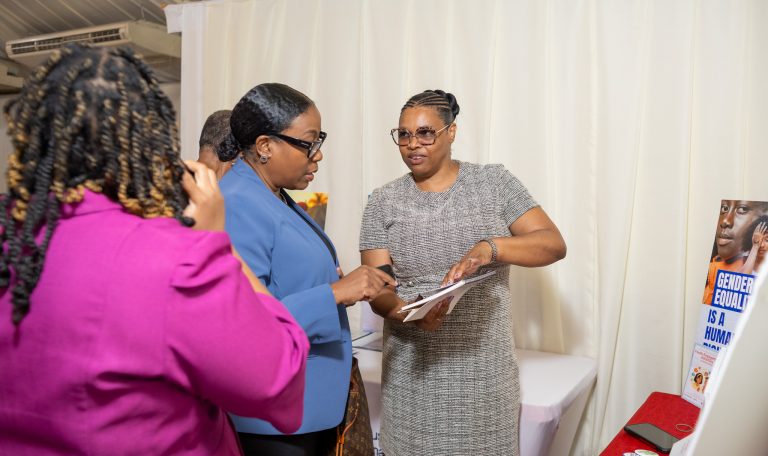
Nichole Morris, Alinea International’s Field Manager in Jamaica shares teaching materials developed by the SAIL-SRHR project
From Participation to Empowerment
CVC’s Technical Programme Officer Andrea Campbell-Wright, who coordinated the organization’s implementation of the SAIL-SRHR project, said one of the most rewarding aspects of the project has been witnessing the personal growth of the young people involved. “When we started working with many of these young people, some lacked confidence, some were uncertain about their futures, and others had never been given an opportunity to express their views on issues affecting their lives. Today, we have young researchers presenting findings, peer educators leading conversations about sexual and reproductive health, and young entrepreneurs building businesses and creating opportunities for themselves. Seeing that growth has been one of the most meaningful achievements of SAIL,” she said.
Campbell-Wright also noted that the project’s success was also rooted in its ability to connect young people with the support systems and opportunities needed to turn knowledge into action. “One of the biggest lessons from SAIL is that young people do not lack ideas, ambition or the desire to make a difference. What they often lack are the opportunities, resources and supportive environments to realise their potential. When we invest in their capacity, listen to their experiences and give them space to lead, the results can be extraordinary. Our hope is that the networks, skills and confidence developed through this project will continue to benefit these young people and their communities for years to come,” she said.
Building on the Legacy
Although the SAIL-SRHR project has reached its conclusion, the partnerships, skills and institutional capacity developed through the initiative provide a foundation for continued progress. The project demonstrated the importance of combining healthcare improvements with education, community engagement, advocacy and opportunities for young people to lead. It also reinforced the critical role of civil society organisations in reaching underserved populations, addressing stigma and discrimination, and ensuring that adolescents can access accurate information and appropriate services.