

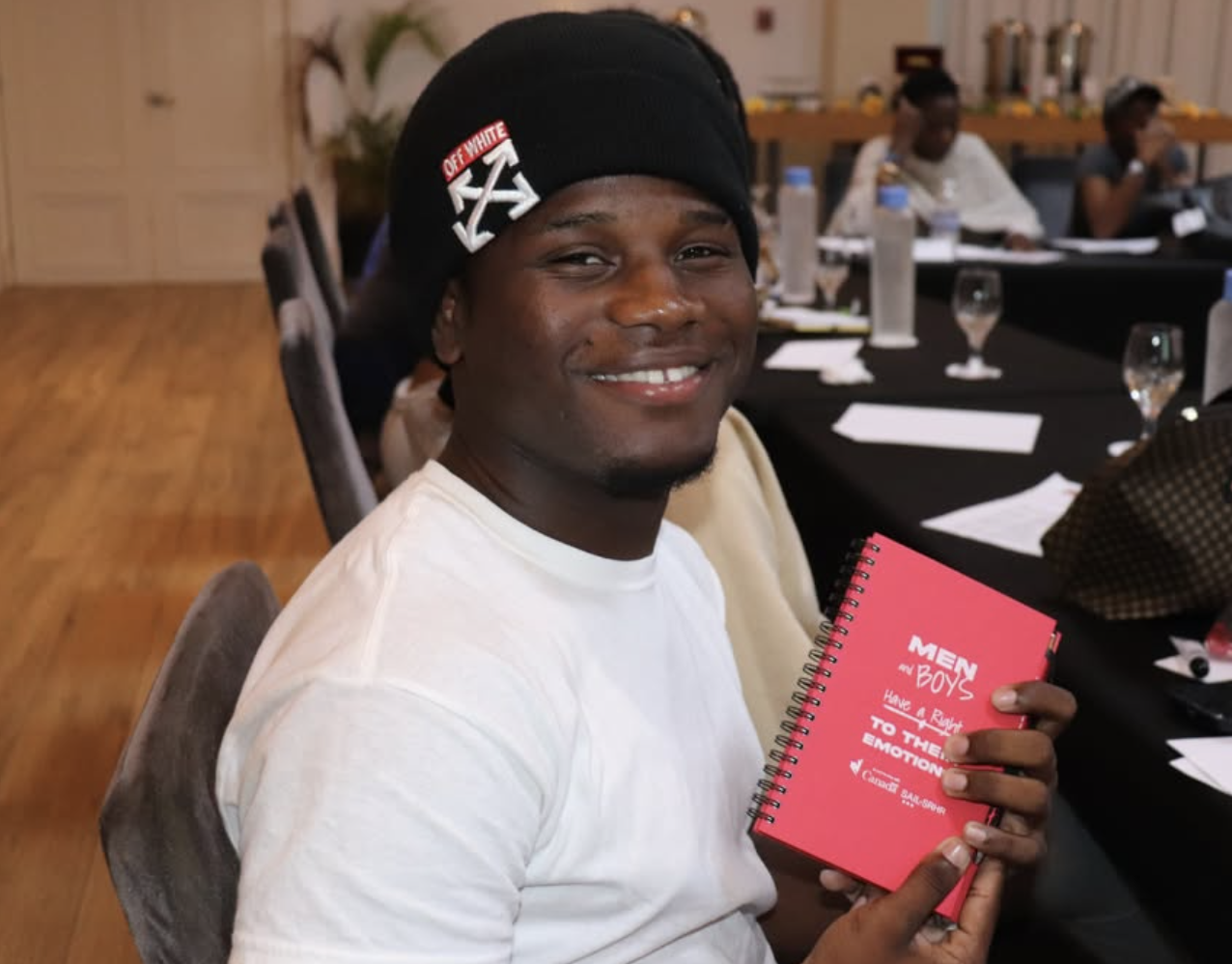
For Vaughndell Wilson, from the parish of St. Thomas, becoming a peer educator with the Strengthening Access, Inclusion and Leadership for Sexual and Reproductive Health and Rights (SAIL-SRHR) Project changed more than what he knew about sexual and reproductive health. It changed how he thought about masculinity, relationships, consent and his responsibility for his own health.
Before his involvement in the project, Vaughndell says he and many of his male peers shared traditional ideas about what men should be, particularly when it came to emotions. “Before I became a peer educator, it was a general belief by myself and most of my male peers that men shouldn’t show any emotion within a relationship, that ‘Man must act like Man’ by not reacting to anything or showing how they feel because that would make them seem weak,” he recalled.
These are some of the harmful gender expectations that the SAIL-SRHR project has sought to challenge through its work with adolescent boys and young men. Throughout the life of the project, peer educators have been trained to share accurate sexual and reproductive health and rights information, encourage healthier decision-making and engage their peers around positive masculinity and gender equality. The peer-led approach recognises that young people may be more comfortable discussing sensitive issues with someone who understands their experiences and the social pressures they face. After attending several intensive peer-educator and life skills training sessions, he says there have been tangible changes in his own behaviour. “I’ve learned that positive masculinity is when you use your social and physical strength to support others. And when it comes to gender equality, I see people differently now. We must respect and treat everyone with care regardless of their gender,” he said. His understanding of consent has also changed. “Regarding consent I realize that it is needed even if you’re in a relationship with the person, and your sexual reproductive health must be an essential part of your life. I’m also more cautious when it comes to anything sexual and I always use protection now and get tested often.”
The impact is also extending beyond Vaughndell himself. As a peer educator, he has been able to carry these conversations into his own social networks and observe changes among the boys and young men around him. “They talk about women with more respect, they’re more concerned about their sexual health, they’re also reporting using condoms now more often than before the SAIL project started engaging them,” he said. “They’re also saying that they now always ask for clear consent before sex and they now realize that they have more responsibilities as a man, such as, being a breadwinner, protector and emotional supporter.”
The SAIL-SRHR project’s peer educator programme is aligned with Immediate Outcome 1212, which speaks to peer educators trained and peer networks established and expanded to deliver SRHR and healthy masculinity education to adolescent girls and boys and vulnerable key populations.


