

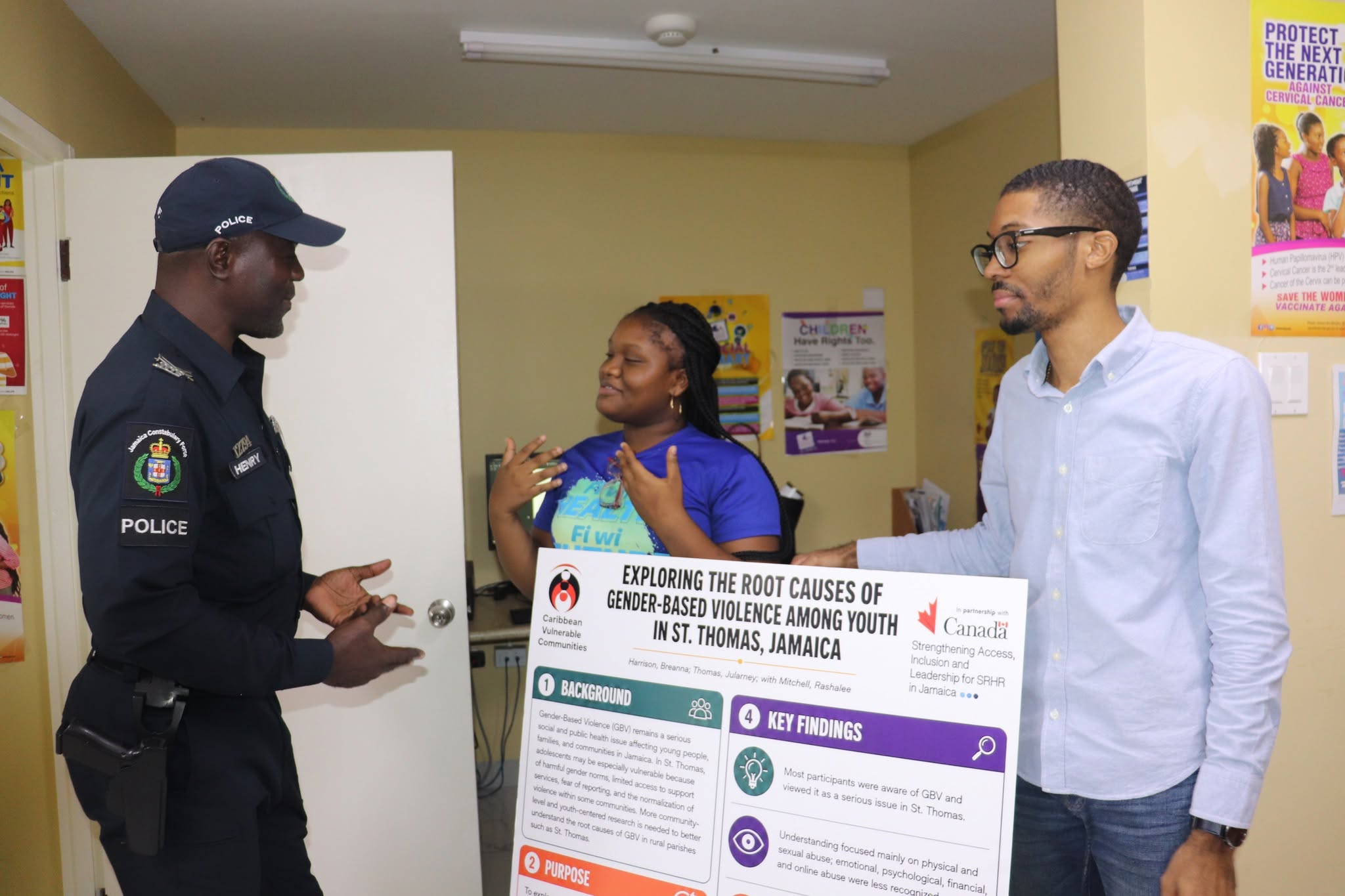
Young people in St. Thomas are helping to shape the conversation around gender-based violence (GBV) and the actions needed to make their communities safer.
The Strengthening Access, Inclusion and Leadership for Sexual and Reproductive Health and Rights (SAIL-SRHR) project recently hosted its first Participatory Action Research dissemination meeting, bringing together adolescents, community stakeholders and service providers to discuss the findings of youth-led participatory research.
The meeting, held in St. Thomas, featured lead researchers Breanna Harrison and Jularney Thomas, who presented their study, titled ‘Exploring the Root Causes of Gender-Based Violence Among Youth in St. Thomas, Jamaica’. The research examined adolescents’ understanding of gender-based violence, its perceived causes and effects, barriers to reporting, and the support systems young people believe are needed.
The study involved 31 questionnaire respondents and 20 participants in semi-structured interviews, all between the ages of 16 and 19. The research found that while 77.4 per cent of respondents had previously heard of gender-based violence, participants were more likely to recognise physical and sexual abuse than economic abuse, controlling behaviour and other less visible forms of violence.
Breanna Harrison believes the fear of stigma and discrimination was one of the most significant issues identified in the study. “The main thing that stood out to me was that most adolescents reported being afraid of discrimination and stigma, so they tend to be silent about GBV,” she said. She noted that adolescents are often involved in relationships but may not feel comfortable speaking about their experiences. “This research gave them the opportunity to speak about some of the issues they face,” Breanna added.
The study identified harmful cultural beliefs, jealousy, poor communication, social media influence, substance use, unemployment and a lack of consequences as factors contributing to gender-based violence. Participants also reported that fear of judgment, shame, retaliation, disbelief and distrust of authorities discouraged victims from seeking help.
Meanwhile Jularney Thomas said the research revealed important gaps in young people’s understanding of GBV and available reporting systems. “Most persons found it difficult to differentiate between gender-based violence and regular violence,” he explained. “Another eye-opener is that adolescents don’t know who to go to, to report GBV, so we also need to do more to build awareness about that.” He recommended greater involvement from duty bearers, including police officers and guidance counsellors, in educating and supporting young people to tackle issues like gender based violence.
The research also showed that participants wanted more school-based education on consent, boundaries and healthy relationships, stronger counselling and mental health services, safe shelters, legal support and confidential youth-friendly reporting systems. They also recommended engaging men and boys, strengthening accountability and expanding economic opportunities for vulnerable young people.
In the meantime, Corporal Dwight Henry, Safe Schools Coordinator within the Community Safety and Security Unit in St. Thomas said the findings would help guide future community and school engagement. “We plan to engage with the community more to improve awareness and build confidence in the agencies that are here to support them,” he said, adding that GBV education would be incorporated into school activities and youth intervention programmes.
Nehanda Brown who is the St. Thomas Behaviour Change Communication Coordinator with the Ministry of Health and Wellness says her office will also be taking a similar approach when they engage young people. “Based on the findings of the research, the fact that we have adolescents facing the issue of gender-based violence, and knowing that persons who are affected by GBV are usually at a higher risk of contracting HIV, moving forward based on what the research has shown, we will include talks about gender based violence in those efforts,” she said
The SAIL-SRHR Project is funded by Global Affairs Canada and implemented in partnership with Alinea International. The Participatory Action Research component of the project is being implemented by the Caribbean Vulnerable Communities, empowering adolescents to investigate issues affecting their peers and contribute directly to evidence-based advocacy and community action.


