

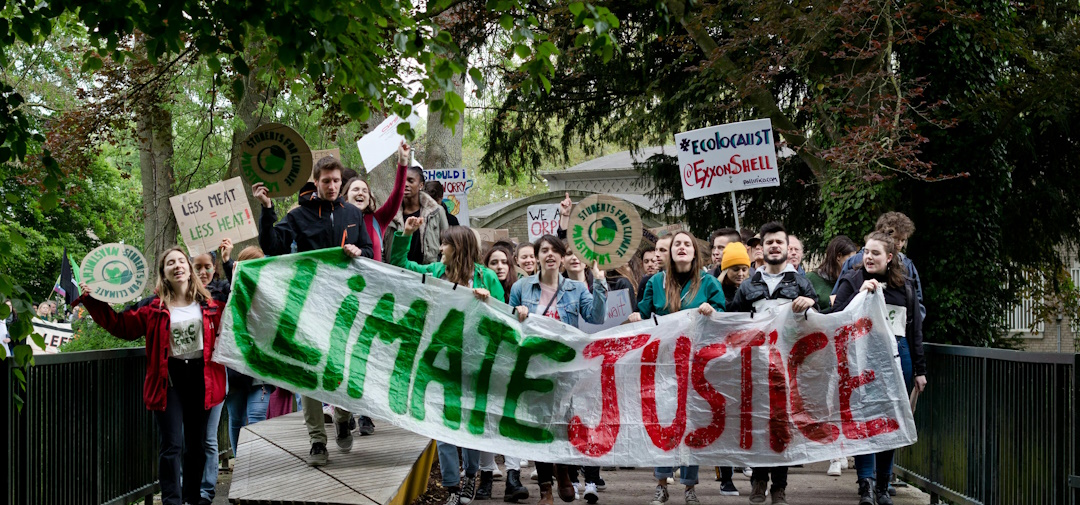
Many of the people and communities that are most vulnerable to climate change and environmental degradation are those who are already poor and largely excluded from the rewards of global economic activity. Responsibility for human-caused climate change is also distributed unevenly – most historical emissions have been from the richest countries that have the most resources and capacity to adapt to rising temperatures.
In addition to this geographical dimension, climate change is intimately related to other inequalities, such as structural racism. Even within the same country or city, people with less privilege in society – whether due to their ethnicity, gender or other factors – are likely to be worst affected by climate change. The logic also applies on an intergenerational basis: young people and future generations have contributed least to rising temperatures but will suffer most from extreme outcomes over the course of this century.
Climate justice identifies climate change as a symptom of these unfair and unrepresentative economic, social and political institutions. This means that climate justice inherently seeks to remedy not just the impacts of climate change and the decision-making around which climate actions a community should take, but it also connects to other movements for social justice:
- Gender justice: women disproportionately face the brunt of climate change impacts, yet are still underrepresented in government and other forms of leadership
- Reproductive justice: climate change and global warming make conception, pregnancy and childbirth increasingly difficult
- Trans liberation: Trans and other LGBTQ+ communities experience systematic marginalization and violence on any given day, but during incidents of climate disasters, their marginalization often leaves them out of disaster relief efforts to face the impacts on their own.
- Migrant justice: Climate change impacts make living conditions so difficult that entire communities seek to migrate–climate migrants and refugees–who face discrimination and difficulties seeking status or relief from impacts in their new homes.
Author: Alicia Richins
Sustainable Impact Strategist | SDG Champion | Climate Justice Advocate | Climate Futures Writer


